Color Block Jam
- 4.1
- Rating
- 10.00M
- Installs
- Free
- Price

 Analysis by App-foxy
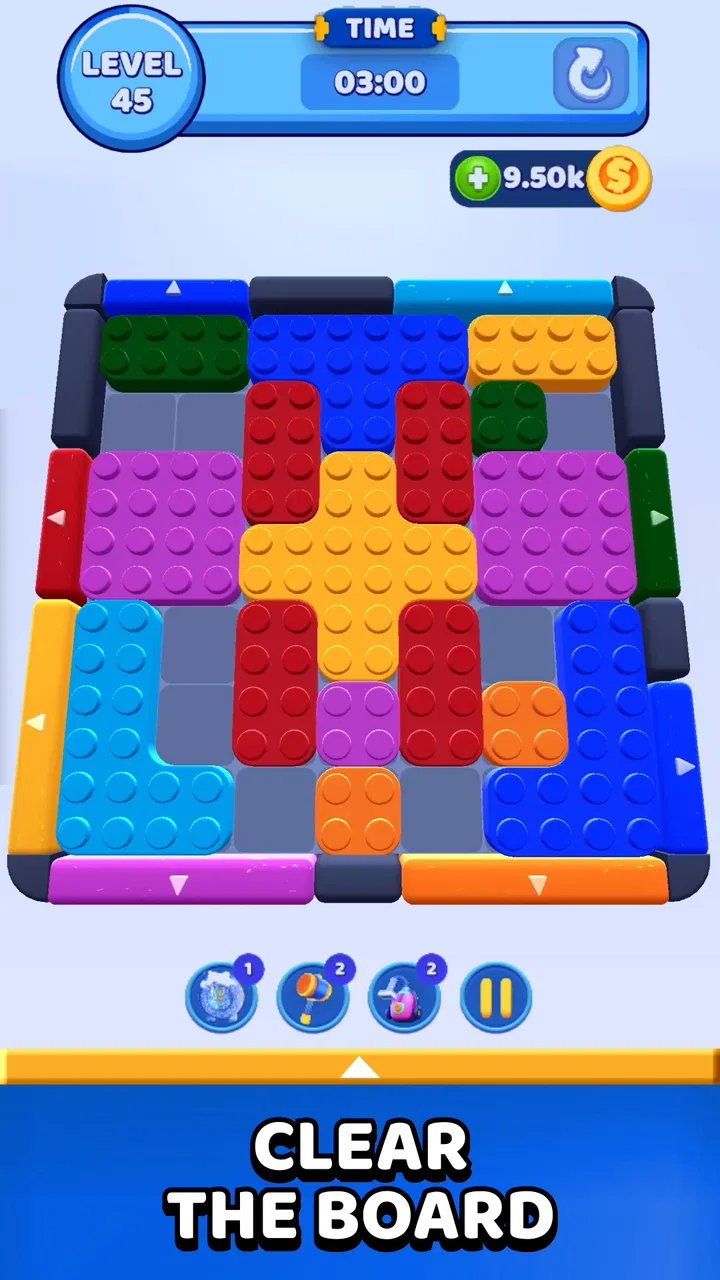
I found Color Block Jam easiest to understand in a shared-device situation: someone opens it for a quick puzzle, passes the phone to another person, and the next player immediately sees a board that is simple to read but not always simple to solve. It is a free puzzle game from Rollic Games, built around arranging colored blocks and working out the order that clears the board. The basic idea takes seconds to grasp, yet the decisions become more demanding as the challenges progress.
That combination is why I think it works well for households, waiting rooms, and short breaks. It does not ask me to learn a long story, memorize complicated controls, or commit to a lengthy session before the fun starts. At the same time, it is not merely a reflex toy. The best moves usually come from looking ahead, noticing which space will open next, and resisting the temptation to place a block just because it fits immediately.
How the game feels when several people share one device
On a phone or tablet used by more than one person, the strongest part of the experience is its visual clarity. A player can hand over the device and explain the basic goal in a few words: match the colors, make room, and avoid blocking the useful paths. That makes it approachable for a child, a parent, or a friend who does not normally play puzzle games.
You May Also Like

 Blood Strike: 2.5 Anniversary
Blood Strike’s Loadouts Turn Every Drop Into a Tactical Gamble
A close look at Blood Strike’s custom loadouts: how fast access to signature weapons reshapes its battle royale rhythm, rewards preparation, and narrows the gap between fights.

 Pandora - Music & Podcasts
Pandora’s Music Is Easy to Start, but Harder to Recover
Pandora’s strength is its low-effort path from a seed to a station. Its weak spot is how much confidence it asks you to place in connection, setup, and quiet recovery.

 8 Ball Pool
 Is Built on Rivalries, Rematches, and Routine
A close look at the rivalries, rematches, shared routines, and unanswered safety questions that turn a quick pool match into a persistent mobile community.

 Samsung Music
’s Quiet Strength Is Playing What You Already Own
Its reach comes less from spectacle than from dependable access to a personal library. That simplicity is both the app’s strongest retention engine and its ceiling.

 AccuWeather: Weather Radar
AccuWeather Review: A Quick, Clear Forecast for Everyday Decisions
For everyday plans, the best forecast is the one you can understand quickly. AccuWeather makes rain timing, radar, and local conditions easy to act on, with a few trade-offs.

 Hill Climb Racing
Why Hill Climb Racing Still Turns Crashes Into One More Run
A tiny car, a bumpy hill and one more upgrade: Hill Climb Racing keeps resurfacing because its simple chaos makes every near-miss feel personal.
More From Our News Desk



Shared play is naturally informal rather than competitive in a formal sense. One person may suggest a move while another controls the board, or two people may take turns solving separate challenges. I enjoyed that “what if we put this here?” rhythm because it turns a solitary puzzle into a small conversation. It also exposes whether someone is planning ahead or simply reacting to the most obvious opening.
There is a practical catch. A puzzle can feel personal once a player has spent time studying the arrangement, so passing the device at the wrong moment may interrupt concentration. I found it better to agree on a simple handoff rule: finish the current move or reach a natural stopping point before giving the phone to someone else. That tiny bit of coordination prevents the game from becoming frustrating in a household where several people want a turn.
For a quick evening activity, the game fits especially well when nobody wants to set up a board game. A family member can solve while another person checks the possible consequences, and the discussion stays focused because the board communicates the problem directly. I would not treat it as a replacement for a deep multiplayer puzzle experience, though. Its appeal comes from sharing ideas around one screen, not from a full social mode with elaborate roles or team tools.
Why the simple board still rewards careful play
The useful skill here is not speed. I get better results when I first identify the colors or spaces that are hardest to access, then consider whether a move will preserve room for later pieces. A block that looks convenient can become a wall, while a less obvious placement may open the route needed to finish the arrangement.
When playing with another person, I recommend saying the plan aloud before touching the screen. That creates a natural pause and makes mistakes easier to spot. It is also a good way to include a younger player without taking control away from them: ask what they think the next move should be, then let them try it. The game becomes a lesson in consequences without feeling like a lesson.
Another useful habit is to separate a “safe” move from a “hopeful” move. A safe move preserves several options; a hopeful move depends on a particular opening appearing later. When I am uncertain, I prefer the safe choice unless the board is already close to being locked. This approach is more reliable than chasing the first match that catches my eye.
Setting up a shared device without making assumptions
Color Block Jam is listed for Everyone, which makes its general presentation suitable for a broad age range. That does not mean every household will experience it in exactly the same way. A younger player may focus on the colors and immediate matches, while an older player may care more about efficiency, planning, and whether a mistake can be recovered.
The game is free to download, but it includes in-app purchases ranging from $0.99 to $99.99 per item. In a shared-device home, that is the detail I would discuss before handing over the phone. The important boundary is not complicated: everyone should know whether purchases are allowed, who approves them, and whether the device owner expects the game to be used without spending.
I would also avoid assuming that a shared device equals a shared game identity. If several people play on the same installation, progress and choices may become difficult to attribute. A child might solve a challenge that a parent wanted to attempt, or one person might change the state before another returns. Since the game is best suited to casual handoffs rather than carefully separated profiles, a household should decide whether that loss of individual ownership matters.
For that reason, I see two sensible arrangements. On a family tablet, treat the game as a communal activity and accept that the board is shared. On a personal phone, keep it as one player’s space and invite others to advise rather than taking turns freely. Neither approach is universally better; the right choice depends on whether the household values a common puzzle session or separate progress.
The age label also should not be mistaken for a promise that every moment will suit every child. The puzzle itself is easy to understand, but frustration can appear when a player makes an irreversible-looking mistake or encounters a board that demands more planning. I would introduce it to a younger player by solving alongside them first, rather than leaving them to work out the interaction and the strategy at the same time.
What I would explain before the first turn
I would tell a new player three things. First, matching a color is only part of the task; the placement must also leave enough room for the remaining blocks. Second, the most attractive move is not always the best move. Third, it is fine to pause and inspect the board instead of tapping quickly.
That short explanation prevents the most common early misunderstanding: treating every available placement as equally useful. It also makes the game more welcoming for people who are not accustomed to puzzle mechanics. A child can experiment, while an adult can demonstrate how one move changes the options that follow.
On a shared device, I would keep notifications and other interruptions in mind without turning the setup into a technical project. A puzzle that depends on visual attention is easier to enjoy when the player can see the whole board and think without being rushed. This matters particularly when two people are discussing a move, because an interruption can break the chain of reasoning.
Coordinating turns, advice, and different skill levels
The best household sessions I can imagine are cooperative without pretending to be a formal multiplayer mode. One player holds the device, another acts as the strategist, and they swap after a challenge or a natural pause. This arrangement gives both people something to do and avoids the awkwardness of one person grabbing the phone while the other is still thinking.
Different skill levels can actually improve the experience. A confident player may notice the long-term pattern, while a beginner may spot a straightforward match that the expert overlooked. I like that the board is concrete enough for both observations to be tested immediately. The stronger player should resist solving every step, though. Asking “what space will that leave?” is more useful than simply announcing the answer.
For children and adults sharing the game, a good rule is to let the person holding the device make the final choice. Advice remains welcome, but control stays with the current player. That keeps the activity collaborative rather than turning it into a demonstration by the fastest thinker. It also gives younger players room to learn from a failed plan instead of feeling that every move must be approved.
There is a trade-off between taking turns and maintaining one continuous attempt. Taking turns makes the game social, but it can weaken memory of the board’s logic. A single player may prefer uninterrupted concentration, especially on a difficult arrangement. If the household wants both, I would use shared discussion for easier challenges and reserve harder ones for individual sessions.
The game’s short-break nature is another advantage here. I can imagine opening it while waiting for food, during a commute break, or between household tasks, then putting it down without needing to remember a complicated narrative. That makes it more flexible than a story-heavy game, but less satisfying for someone seeking a large world, character development, or a substantial competitive system.
How it compares with familiar puzzle alternatives
Compared with a traditional falling-block game, Color Block Jam feels more deliberate because the central challenge is arranging a solution rather than reacting continuously to pieces dropping. That makes it friendlier to players who dislike time pressure. The trade-off is that anyone who enjoys fast reflexes and escalating speed may find it calmer than expected.
Compared with a match-three game, it places more emphasis on spatial planning and the order of actions. Match-three puzzles often reward scanning for combinations and creating chain reactions; here, I pay more attention to whether the board will remain workable after a placement. Someone who enjoys colorful feedback but wants a more thoughtful pace may prefer this approach.
Compared with a paper puzzle book, it is more convenient because the game handles the visual arrangement and lets me try moves directly. A printed puzzle can feel more peaceful and free from digital distractions, though, and it does not raise the same questions about shared-device boundaries or purchases. For quiet solo concentration, paper still has an appeal that this game cannot reproduce.
Compared with a fully competitive puzzle app, this one is easier to use casually with another person because the board itself is the conversation. However, players looking for rankings, head-to-head matches, or a strong community layer should choose a game designed around those features instead. I would recommend this title for the act of solving, not for the surrounding competitive ecosystem.
Age, trust, and the small points that affect enjoyment
The Everyone rating makes the game an easy candidate for a family device, but trust still matters more than the label. A parent may be comfortable with the puzzle while wanting to set a clear rule around purchases. A teenager may prefer privacy over shared turns. An adult may enjoy helping a child but dislike having their own unfinished challenge changed. These are household decisions, not problems the puzzle can solve for you.
I also think expectations should be realistic about difficulty. The opening concept is accessible, but accessible controls do not guarantee effortless solutions. A player who expects every board to be solved by quick matching may become annoyed when planning is required. Conversely, someone who likes examining possibilities and learning from a blocked arrangement will probably appreciate the gradual mental demand.
One of my favorite practical uses is as a low-pressure conversation starter. Instead of asking a child to sit through an explanation of strategy, I can point to the board and ask which color should move first. The answer reveals how they are thinking, and the next move gives immediate feedback. It is not an educational app in the formal sense, but it naturally encourages sequencing, spatial awareness, and patience.
Another use is a shared reset after a busy day. A couple or family member can solve one board together without committing to a full game night. The limitation is that the experience can become repetitive for someone who needs constant novelty or a strong narrative reason to continue. I would use it as a compact activity, not as the only game on a household device.
Players should also decide what “progress” means to them. If the satisfaction comes from solving each arrangement, shared play works well even when another person advances the game. If the satisfaction comes from personally completing every challenge, a shared installation may feel disruptive. That distinction is easy to overlook, and it is probably the most important account-boundary question for a family.
Performance, access, and who should download it
The current version is 1.34.20, and the game supports Android 7.0 or later. That gives it a relatively broad reach among Android devices, which is useful when a household shares an older tablet rather than a recent phone. I would still judge the experience by the actual screen: a larger display can make group discussion easier, while a small phone may be better for private, one-handed sessions.
Its popularity is substantial, with over 10 million installs and an average rating of 4.3 from around 273 thousand ratings. Those figures suggest that the central formula connects with many players, but they do not remove the personal question of whether this particular style of puzzle is enjoyable. I found the strongest appeal in the clear visual problem-solving, not in any promise of endless variety or social competition.
As a free game, it is easy to try without an upfront payment. The purchase range means I would be especially careful on a device used by children or guests. Even when nobody intends to spend, a shared device benefits from an explicit agreement. That advice is less about this puzzle’s mechanics than about keeping a casual game from creating an avoidable household disagreement.
I would recommend it to someone who wants colorful, turn-based-feeling spatial puzzles, enjoys thinking before acting, and likes the option of discussing a board with another person. It is also a good fit for a player who wants something that can be picked up for a short session without learning a large ruleset.
I would skip it if my priority were a story campaign, real-time action, deep player-versus-player competition, or a completely purchase-free environment. I would also hesitate to make it the centerpiece of a shared family profile if everyone cares about separate progress. In those cases, a narrative puzzle game, a competitive title, or a traditional paper puzzle may be a better match.
My household verdict after using the puzzle
Color Block Jam succeeds because it makes the board understandable while leaving enough room for mistakes, discussion, and better planning. I can see why Rollic Games’ puzzle has attracted a large audience: the premise is immediate, the visual goal is easy to communicate, and the challenge comes from choices rather than complicated controls.
For shared use, I would treat it as a communal board rather than assume that every player has a private space. Agree on purchase expectations, decide whether progress belongs to one person or everyone, and establish a simple turn-taking habit. Those boundaries make the experience smoother, especially when children and adults use the same device.
My final recommendation is positive but specific. This is a strong choice for relaxed household problem-solving, short solo breaks, and players who enjoy planning colored blocks into a workable arrangement. It is not the right choice for fast action, elaborate social features, or strict individual progress. If that distinction suits your needs, the free entry point makes it easy to try, and the game gives you enough strategic depth to remain more engaging than its simple first impression suggests.
FAQs for Color Block Jam
01What is Color Block Jam and how does it work?
Color Block Jam is a puzzle game where players need to strategically place colored blocks on a grid to form complete lines and clear them. The gameplay is simple yet challenging, requiring both quick thinking and strategic moves to progress. The more lines you clear, the higher your score.
02Is Color Block Jam available for both Android and iOS?
Yes, Color Block Jam is available for download on both Android and iOS platforms. Users can find the app on the Google Play Store for Android devices and the App Store for iOS devices. The game is optimized for a smooth experience on both systems.
03Are there any in-app purchases or ads in Color Block Jam?
Color Block Jam is free to download and play, but it may contain ads that appear between levels. There are also optional in-app purchases available, which allow players to buy extra features or remove ads, enhancing the overall gaming experience.
04Can I play Color Block Jam offline?
Yes, Color Block Jam can be played offline, making it a great option for entertainment on the go without needing an active internet connection. However, some features, such as leaderboards or purchasing items, may require connectivity.
05What age group is Color Block Jam suitable for?
Color Block Jam is suitable for players of all ages, thanks to its simple mechanics and family-friendly content. The game’s intuitive design makes it accessible for younger audiences, while its challenging levels provide entertainment for more experienced players.
Pros
- Engaging and addictive gameplay.
- Simple controls for easy learning.
- Vibrant and colorful graphics.
- Regular updates with new levels.
- Minimal ads for smoother experience.
Cons
- Can be repetitive over time.
- Limited power-ups available.
- Requires internet for certain features.
- Occasional lag on older devices.
- In-app purchases can be pricey.

Color Block Jam
Gallery